


A low-cost temperature sensor was enough to revive a power tool battery that appeared dead, avoiding the cost of replacing the entire pack.
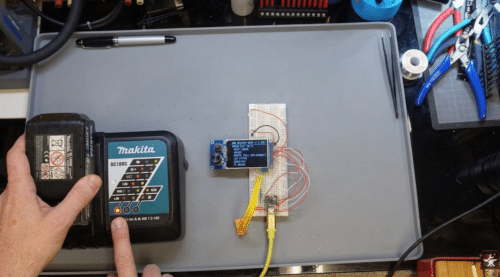
A power tool battery that appeared to be dead was traced to a failed temperature sensor rather than damaged battery cells. The repair, documented by The Repair Forge, a YouTube-based repair and reverse-engineering channel involved a Makita battery that still retained charge but was rejected by its charger as being outside the safe temperature range.

Lithium-ion power tool packs commonly use negative temperature coefficient (NTC) thermistors to monitor cell temperature. Their resistance changes with temperature, allowing the battery management and charging circuitry to determine whether charging can safely begin. If a thermistor fails open, the charger may receive an invalid temperature reading and refuse to charge the pack even when the cells remain usable.
The repairer used PocketOBI, an open-source diagnostic tool based on the Open Battery Information project, which reverse-engineered Makita’s battery communication protocol. When the faulty pack was queried, one thermistor reported about -30°C while another sensor in the same pack showed 28°C. The large difference indicated that the temperature reading was faulty rather than reflecting the actual battery temperature. A second pack produced a 64°C reading from one thermistor, demonstrating another fault condition that PocketOBI could identify. A resistor was temporarily substituted for the suspect sensor to verify the diagnosis before the component was replaced.
The replacement NTC thermistor cost about 20 cents, and the repair itself took around 10 minutes after the fault had been identified, according to the video. Restoring the sensor allowed the battery to charge again without replacing the complete pack.
Repairing the battery requires opening its casing, finding the faulty thermistor and soldering in a replacement. This calls for soldering experience and careful handling of lithium-ion cells because an accidental short circuit can create a safety hazard. PocketOBI was developed through reverse engineering rather than access to Makita’s official protocol documentation. The project is designed for Makita LXT 18V batteries and supports automatic detection of standard and older F0513 battery-management-system generations. Its documentation also warns that repair functions should only be used when the battery cells themselves have been verified as healthy, since forcing a damaged pack back into operation could create a fire risk.
The repair demonstrates how a small temperature-sensing component can prevent an otherwise functional battery from charging. For users with the necessary repair skills, tools such as PocketOBI can help identify this type of fault before resorting to replacing the entire battery pack.
For more information, click here.